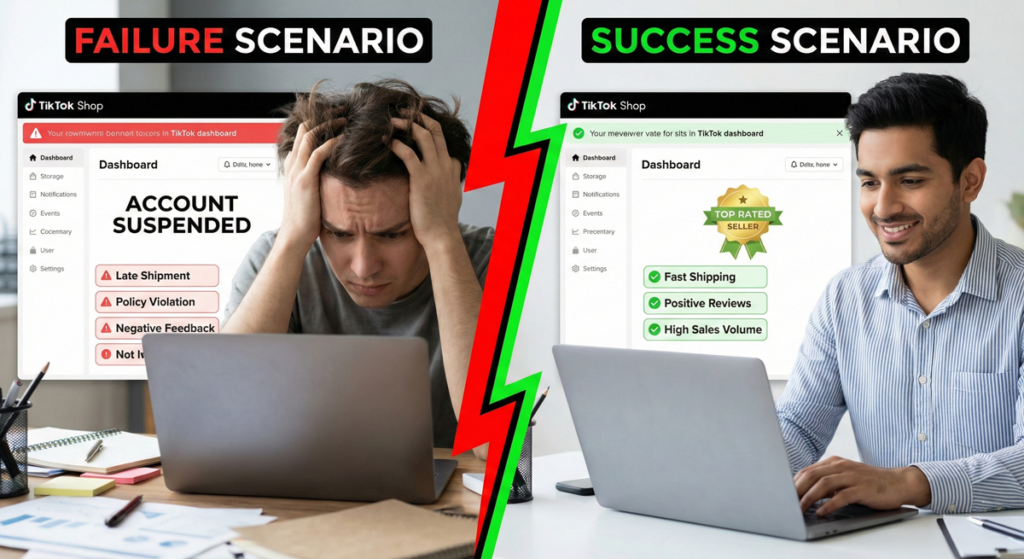

You spent three weeks creating viral TikTok content. Your video hit 500k views. Orders flooded in. You were ecstatic. Then TikTok suspended your seller account because your supplier didn’t ship orders within 48 hours. Three weeks of work. Gone. Because you chose the wrong fulfillment partner.
If you thought dropshipping was dead, you haven’t been watching TikTok Shop in 2026. The platform has revolutionized e-commerce, but it introduced a challenge that kills unprepared sellers: speed requirements that make traditional dropshipping infrastructure obsolete.Let me show you exactly what TikTok Shop demands from suppliers, why standard dropshipping methods will get you banned, and what fulfillment infrastructure actually works at scale.
Why TikTok Shop supplier requirements are completely different from regular dropshipping
TikTok Shop isn’t Shopify with a payment processor. It’s a closed ecosystem with brutal enforcement of seller performance metrics.
The 48-hour ship-out requirement is non-negotiable
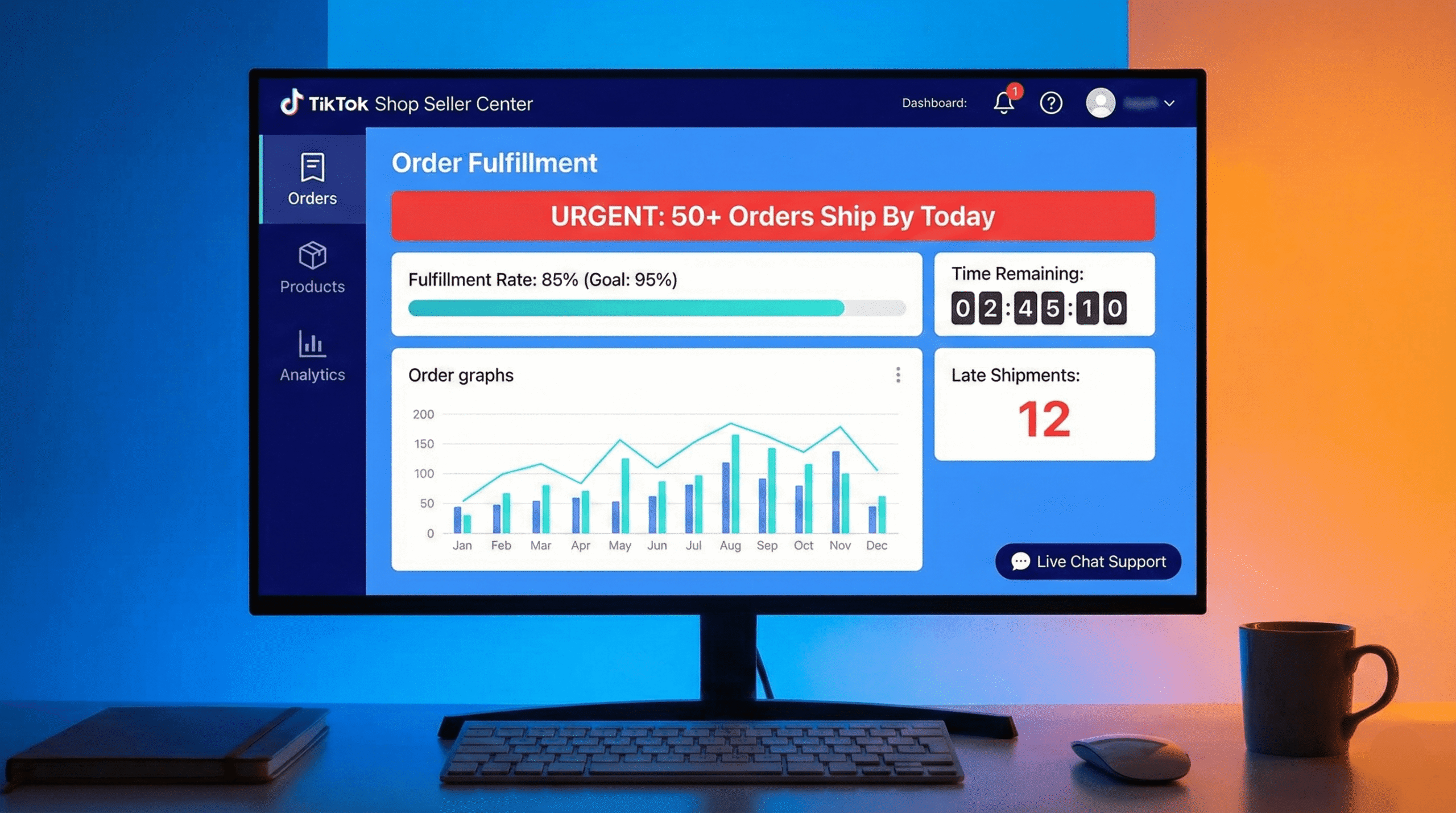
Traditional dropshipping gives you flexibility. Order comes in, you forward it to supplier, they process it in 2-5 days, it ships eventually. TikTok Shop doesn’t work that way. Every order must receive a valid tracking number within 48 hours of purchase. Not “we’ll ship soon.” Not “processing.” An actual tracking number from a recognized carrier that updates within TikTok’s verification system. Miss this deadline on more than 2% of orders and your seller privileges get suspended. Miss it consistently and you’re permanently banned. This single requirement eliminates most traditional dropshipping suppliers who process orders on-demand.
Delivery speed directly impacts your account standing
TikTok measures seller performance by late delivery rate. If more than 5% of your orders arrive after the promised delivery window, you face penalties, reduced visibility, and potential suspension. Your viral video drove 1,000 orders? Great. If 60 of them arrive late because your supplier uses slow shipping, your account is now flagged. This isn’t about customer satisfaction. It’s about algorithmic enforcement. The platform doesn’t care why deliveries were late. It only cares that they were.
Split shipments from multiple suppliers destroy customer experience
TikTok customers expect Amazon-like simplicity. They see a product in a video, buy it with two taps, and expect it to arrive quickly in one package. If you’re dropshipping from three different suppliers and the customer receives three separate packages on three different days, TikTok’s system flags this as poor seller performance. The customer might not even complain. But the algorithm notices. And the algorithm decides your fate.
Return and refund policies are strictly enforced
TikTok Shop requires clear return policies and fast refund processing. If you’re working with suppliers who don’t accept returns or take weeks to process them, you’re personally liable. You can’t hide behind “contact the supplier.” TikTok holds you accountable. The customer gets their money back. Whether you recover costs from your supplier is your problem.
The exact supplier criteria that keep you compliant with TikTok Shop
Let’s get tactical. Here’s what your fulfillment infrastructure must provide to operate successfully on TikTok Shop in 2026.
Processing time of 1-2 business days for in-stock items
Your supplier needs to generate valid tracking numbers within one to two business days for products they have in stock. This means you need to work with partners who maintain inventory, not source on-demand. If you’re ordering products only after customers buy them, you’ll miss TikTok’s deadlines. The model requires pre-stocked inventory in a warehouse ready for immediate fulfillment. Random suppliers shipping whenever they feel like it don’t meet this standard. Partners with warehouse infrastructure and daily shipping operations do.
Faster shipping options that deliver within reasonable timeframes
Standard shipping with 15-20 day delivery windows doesn’t work on TikTok Shop. Customers expect reasonably fast delivery, and the algorithm penalizes consistently late arrivals. You need shipping options that deliver in 5-12 days depending on destination. This typically means premium shipping lines that cost more than the cheapest options but keep you compliant and competitive. This is the balance between cost and compliance that makes TikTok Shop dropshipping viable.
Consolidated shipping when you sell multiple products
When all your products are stored in one warehouse location, multi-item orders can ship together in one package. This improves customer experience and reduces shipping costs. If your products are scattered across multiple suppliers in different locations, consolidation becomes impossible. Each item ships separately, customer experience suffers, and your TikTok metrics take a hit. Warehouse-based fulfillment solves this. Pure dropshipping from multiple random suppliers doesn’t.
Quality control that prevents viral disaster scenarios
One TikTok video showing a customer receiving a broken, wrong, or low-quality product from your store can destroy your brand overnight. The algorithm amplifies negative content just as effectively as positive content. A disappointed customer with 10k followers can cost you tens of thousands in lost sales. Your fulfillment partner needs systematic quality control. This means inspecting products before they enter inventory, not hoping suppliers sent the right thing.
Tracking numbers that actually update in TikTok’s system
Not all carriers and tracking numbers work with TikTok’s verification system. You need fulfillment partners who use recognized carriers whose tracking updates TikTok accepts. This technical detail seems minor until your account gets flagged for “non-shipment” even though packages are actually in transit.
Learn why warehoused inventory models work better than pure dropshipping for social commerce platforms.
Why standard dropshipping methods don’t work for TikTok Shop in 2026
Let me be direct: if you’re using traditional dropshipping methods where you order products only after customers buy them, you’re operating with infrastructure incompatible with TikTok Shop requirements.
On-demand sourcing takes too long
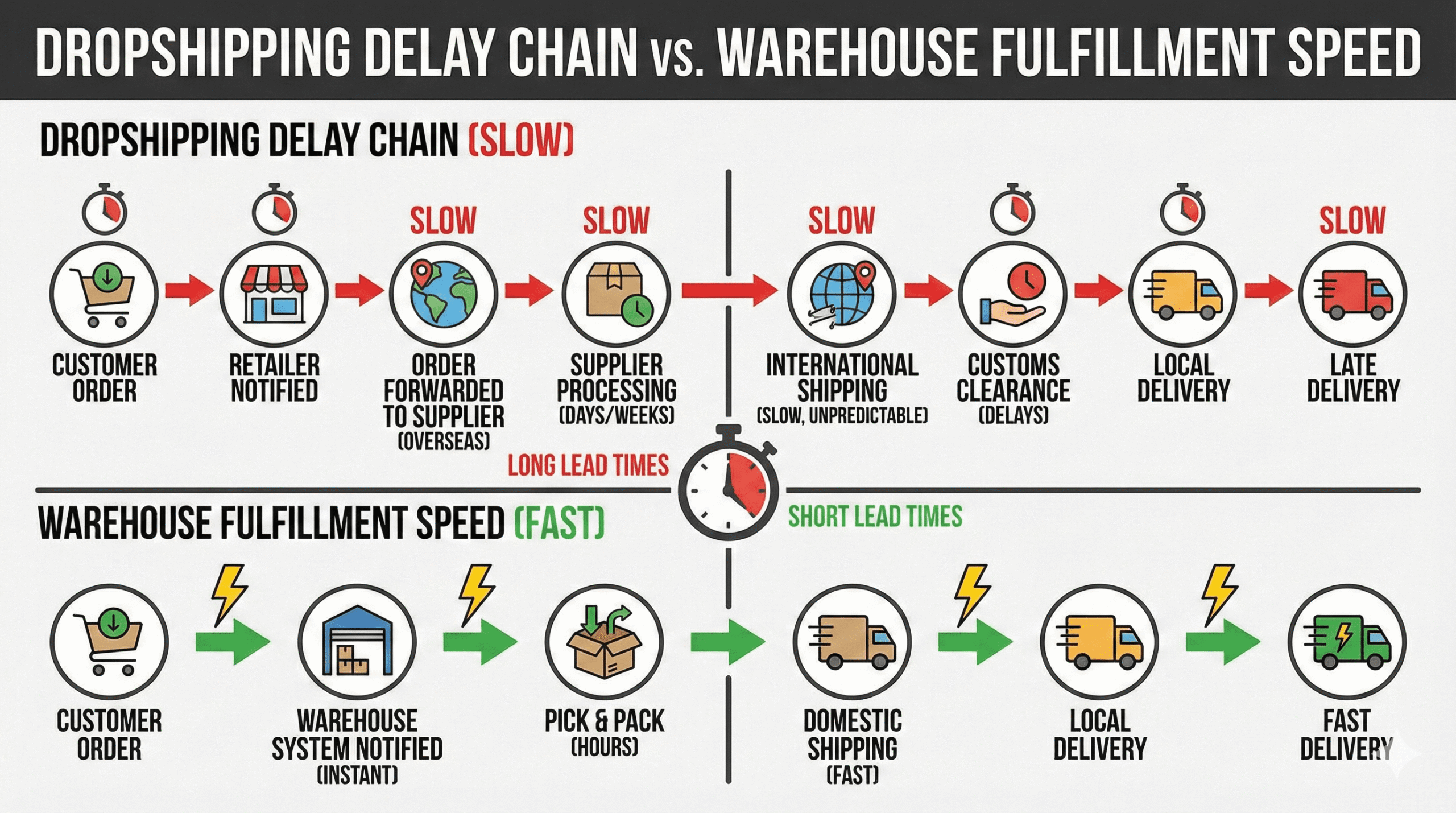
If you wait for a customer order, then source the product from a factory or supplier, then wait for them to process it and ship it, you’ve already blown past TikTok’s 48-hour tracking number requirement. The math doesn’t work. By the time you get tracking, TikTok has already flagged your account.
Split shipments from different suppliers
Customer orders product A and product B. If they come from two different suppliers in different locations, that’s two separate shipments. Two different tracking numbers. Two different delivery dates. TikTok’s system sees this as poor fulfillment performance. The customer potentially leaves a negative review about confusing delivery. Your seller metrics drop. This isn’t theoretical. This is how accounts get flagged.
Tracking numbers that don’t update in TikTok’s system
Many suppliers use shipping methods or carriers that TikTok Shop’s verification system doesn’t recognize properly. You upload the tracking number. TikTok’s system checks it. No updates. As far as TikTok knows, you never shipped the order. Your account gets dinged for non-fulfillment even though the package is actually in transit.
The 2026 customs nightmare for your customers
EU customs regulations require IOSS compliance for all e-commerce shipments. Customers face unexpected fees at delivery when sellers don’t handle customs documentation correctly.
If you’re not handling customs compliance properly, your customers will get hit with unexpected fees at delivery. They’ll demand refunds. They’ll leave terrible reviews. TikTok will hold you responsible.
Random suppliers won’t help you navigate this. You need partners who handle IOSS registration for EU customers and understand customs documentation requirements.
No accountability when quality issues arise
Supplier sends wrong item, damaged product, or something that doesn’t match expectations?
If you don’t have a direct relationship and leverage over that supplier, you’re alone dealing with an angry customer demanding a refund and potentially posting a video about how your store disappointed them.
Discover why the 2026 customs reforms require professional customs handling for international selling.
How to actually start dropshipping on TikTok Shop with compliant infrastructure
Forget the outdated strategies. Here’s what actually works in 2026.
Choose visually compelling products that show transformation
TikTok is a visual platform. Products that show before/after, solve visible problems, or have “wow factor” demonstrations perform exponentially better than generic items.
Think products that create compelling video content. If it doesn’t demonstrate well on video, it won’t sell well on TikTok regardless of how well it sells elsewhere.
Set up your TikTok Shop seller account with realistic promises
TikTok requires business registration, tax information, return policies, and shipping promises that you can actually deliver on.
Don’t promise 3-5 day delivery if your fulfillment takes 7-10 days. Don’t claim free returns if your supplier charges restocking fees.
The promises you make in your shop setup become contractual obligations that TikTok enforces. Violate them and face suspension.
Be conservative with your promises. It’s better to under-promise and over-deliver than to set expectations you can’t meet.
Use a hybrid model with pre-stocked inventory
The most successful TikTok Shop sellers use a hybrid approach. They validate products through testing, then commit to keeping 50-200 units in a fulfillment warehouse.
This allows 1-day processing times, consolidated shipping, and quality control. When you know a product sells, you stock it. When it stops selling, you don’t reorder.
This requires more capital than pure dropshipping but creates infrastructure that TikTok Shop actually rewards.
Connect fulfillment through intermediary platforms
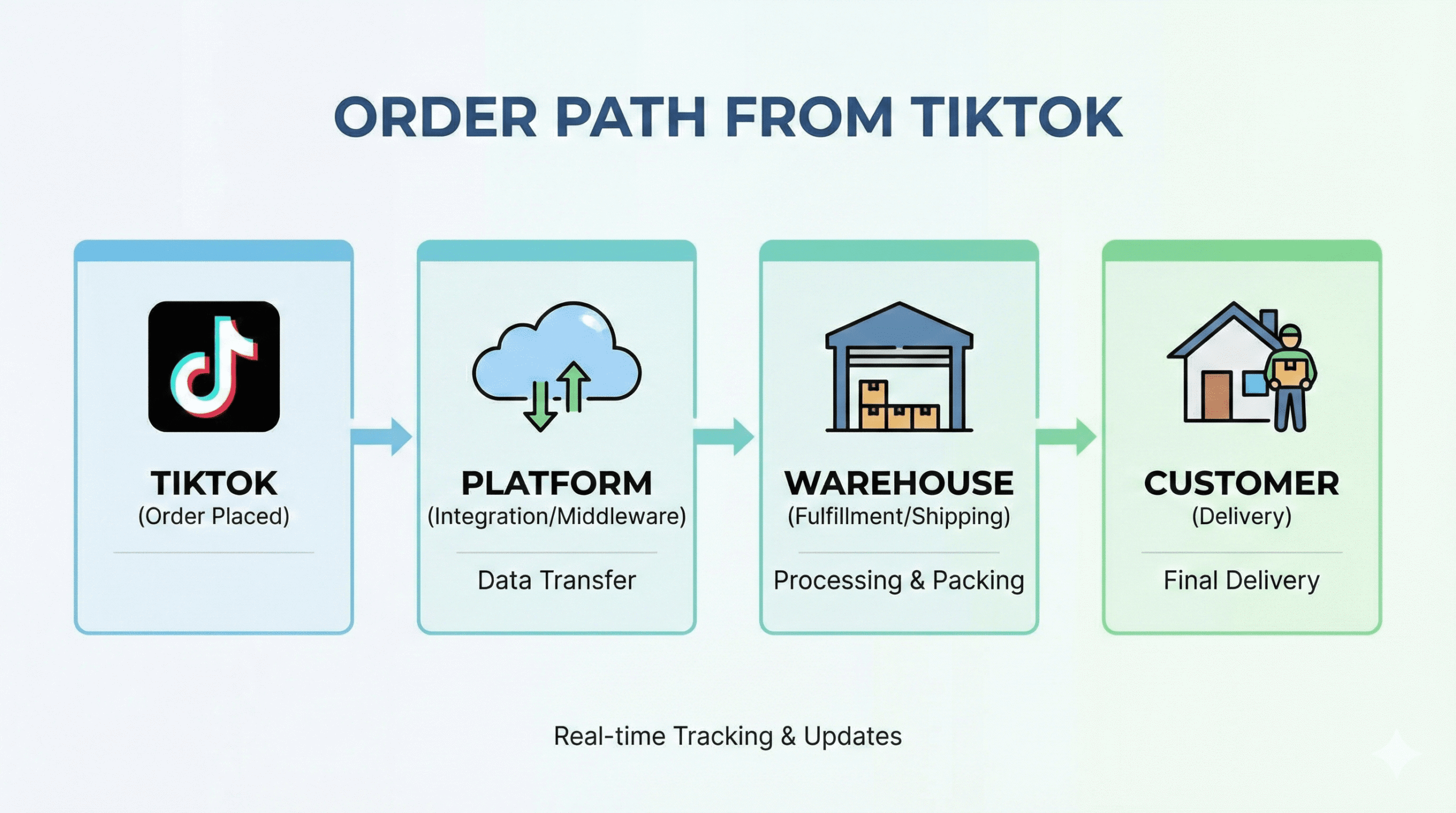
TikTok Shop doesn’t integrate directly with most fulfillment services. You typically need to connect TikTok Shop to Shopify or WooCommerce, then connect those platforms to your fulfillment partner.
This adds a layer of complexity but enables automation. Orders flow from TikTok through your e-commerce platform to fulfillment without manual processing.
The technical setup matters. Improper integration means manual order processing, which doesn’t scale when videos go viral.
What warehouse-based fulfillment actually looks like
Let’s talk about the infrastructure that works, not theory.
Pre-stock winning products in a fulfillment warehouse
Once you’ve validated that a product sells through initial testing, you order batches of 50-200 units and send them to a fulfillment warehouse.
Services like Yakkyofy’s Virtual Warehouse store your inventory and fulfill orders with 1 business day processing time. When an order comes in, the product ships the next business day.
This meets TikTok’s 48-hour requirement consistently because products are sitting ready to ship, not waiting to be sourced.
Access faster shipping lines for reasonable delivery times
Warehouse-based fulfillment partners typically offer multiple shipping options. Standard lines might deliver in 9-15 days. Premium Special Lines deliver in 5-12 days depending on destination.
The faster options cost more but keep you competitive. You balance shipping cost against delivery speed based on your margins and customer expectations.
This flexibility doesn’t exist when you’re dropshipping from random suppliers who only offer one shipping method.
Consolidate multi-item orders automatically
When all your inventory is in one warehouse, orders containing multiple products ship together automatically. One package. One tracking number. One delivery.
Customer experience improves dramatically. Shipping costs decrease. TikTok’s fulfillment metrics stay positive.
This only works with centralized inventory. You can’t consolidate products stored in different locations.
Handle customs compliance for international orders
Professional fulfillment services handle IOSS registration for EU customers, calculate VAT correctly, generate compliant customs documentation, and work with carriers who understand international shipping requirements.
Your customers receive packages without surprise fees. Your account stays compliant with international trade regulations.
This happens automatically in the background. You don’t manage customs paperwork for each order.
The realistic costs and tradeoffs of TikTok-compliant fulfillment
Let’s talk honestly about what this infrastructure costs.
You need capital to pre-stock inventory
Warehouse-based fulfillment requires buying inventory before you have customer orders. If you’re ordering 100 units of a product at $8 each, that’s $800 upfront.
This is more capital-intensive than pure dropshipping where you only buy after customers pay you. But it’s necessary for TikTok Shop compliance.
Start small. Stock 50 units of validated products. Scale inventory as sales prove out.
Faster shipping costs more per order
Premium shipping lines that deliver in 5-12 days cost more than standard shipping that takes 15-20 days.
You might pay $4-$6 for standard shipping versus $8-$12 for faster options. This impacts margins but keeps you competitive and compliant.
You need to price products accordingly. Factor realistic shipping costs into your margins from day one.
You trade capital risk for speed and compliance
Pure dropshipping has minimal upfront cost but can’t meet TikTok Shop requirements. Warehouse-based fulfillment requires inventory investment but delivers the speed and consistency TikTok demands.
This isn’t a flaw. It’s the nature of social commerce in 2026. Platforms enforce quality standards, and quality standards require infrastructure.
Some products will fail and leave you with dead stock
Not every product you stock will become a winner. You’ll occasionally order 100 units of something that stops selling after 30 units move.
This is the inventory risk that pure dropshipping avoids but warehouse-based models accept. The tradeoff is necessary for platform compliance.
Minimize risk by starting with small quantities and only scaling products with proven sales velocity.
Red flags that a fulfillment partner can’t support TikTok Shop
Watch for these warning signs before committing.
They can’t guarantee processing times for in-stock items
If a fulfillment partner can’t commit to 1-2 business day processing for items they have in stock, they don’t have the operational discipline TikTok Shop requires.
Ask explicitly: what’s your processing time for in-stock items? If the answer is vague or conditional, keep looking.
They don’t maintain warehouse inventory
If they only source products on-demand after you receive orders, they can’t meet TikTok’s speed requirements.
You need partners who store your inventory and ship from warehouse stock, not partners who source reactively.
They can’t consolidate multi-item orders
If they tell you each product ships separately from different suppliers or locations, they don’t have centralized warehousing.
Your TikTok customers will receive split shipments. Your performance metrics will suffer.
They don’t handle customs compliance for your destination markets
Ask about IOSS registration for EU customers. Ask about customs documentation. Ask how they handle duties and taxes.
If they don’t have answers or put all responsibility on you, they’re not equipped for international social commerce.
They use carriers TikTok doesn’t recognize
Not all shipping carriers integrate properly with TikTok’s tracking verification system. Ask what carriers they use and whether those carriers work with TikTok Shop.
If they don’t know or haven’t worked with TikTok sellers before, you’re taking a risk.
What success actually looks like on TikTok Shop
The upside is real when you get infrastructure right.
Your seller metrics stay green and your account stays active
When orders process quickly, ship on time, and arrive as promised, your seller score stays high. TikTok’s algorithm rewards this with better visibility.
More visibility means more organic reach. More reach means more sales without additional ad spend.
You can handle viral spikes without operational collapse
When your video gets 2 million views and orders flood in, proper fulfillment infrastructure handles it automatically.
Products ship from ready inventory. Processing happens daily. Tracking uploads automatically. You scale with the opportunity instead of drowning in it.
Customers have positive experiences that build loyalty
Fast processing, reasonable delivery times, accurate orders, consolidated shipments. These create experiences that build loyalty.
On TikTok, satisfied customers create user-generated content. They post unboxing videos. They tag your account. They become free marketing.
This compounds. One successful product leads to sustainable growth, not just a temporary spike.
The bottom line on TikTok Shop fulfillment in 2026
Winning on TikTok Shop requires infrastructure that meets the platform’s performance requirements. 48-hour tracking deadlines. Reasonable delivery speeds. Consolidated shipments. Proper customs handling.
These aren’t suggestions. They’re requirements enforced by algorithmic suspension.
Pure dropshipping where you source products on-demand can’t meet these requirements. The timelines don’t work. The quality control doesn’t exist. The shipping consolidation is impossible.
You need a hybrid model with pre-stocked inventory in fulfillment warehouses. This requires more capital than traditional dropshipping but creates infrastructure that TikTok Shop actually rewards.
Start small. Validate products first. Then commit to stocking 50-100 units of winners. Use fulfillment partners with warehouse infrastructure, daily shipping operations, and customs compliance.
The infrastructure exists. You don’t need to build it yourself. But you do need to understand that TikTok Shop requires a different operational model than traditional dropshipping.
Speed isn’t optional. Compliance isn’t negotiable. Infrastructure isn’t luxury.
Meet the requirements or face suspension. It’s exactly that straightforward.
Start Your dropshipping business
FAQ on TikTok Shop dropshipping fulfillment
What’s the maximum processing time allowed on TikTok Shop?
48 hours to generate valid tracking numbers. Consistently exceeding this leads to account penalties and suspension.
Can I use AliExpress suppliers for TikTok Shop?
Technically yes, but practically no. AliExpress processing times, tracking reliability, and shipping speeds don’t meet TikTok Shop requirements. Most sellers using AliExpress eventually get suspended.
What happens if my supplier ships late?
If late delivery rate exceeds 5%, TikTok penalizes your account with reduced visibility, warnings, and potential suspension. The platform doesn’t care why it was late.
Do I need Special Line shipping for TikTok Shop?
It’s not mandatory, but it’s practically necessary to stay competitive. Customers expect fast delivery, and TikTok’s algorithm rewards sellers who deliver quickly and reliably.
How do I handle returns on TikTok Shop?
You’re responsible for honoring your return policy. Work with suppliers who accept returns and process them quickly, or you’ll be personally liable for refunds with no cost recovery.
What carriers does TikTok Shop accept for tracking?
TikTok’s system recognizes major international carriers and certain regional carriers. Your supplier must use carriers whose tracking numbers update properly in TikTok’s verification system.


