
You found a supplier on Alibaba offering prices 60% lower than competitors. They have “Gold Supplier” badges. Their profile looks professional. You’re ready to send a $3,000 deposit.
Then you read Reddit threads about factories that took deposits and vanished. Scammers using stolen photos. Fake certifications. Wire transfers to personal accounts that disappeared.
Now you’re paralyzed. Is Alibaba legitimate? Can you trust anyone? How do you separate real factories from elaborate scams?
Alibaba is a legitimate platform connecting millions of real businesses. But it’s also a marketplace where scammers operate sophisticated fraud schemes targeting inexperienced buyers. The platform itself isn’t a scam. Using it without knowing how to verify suppliers is gambling with your money.
Let me show you exactly how to verify suppliers, spot red flags, and structure transactions that minimize risk.
Is Alibaba Legit? The Difference Between the Platform and the Sellers
Alibaba is a real B2B marketplace owned by Alibaba Group
The platform has operated since 1999, facilitates billions in annual trade, and connects legitimate manufacturers with global buyers. It’s publicly traded, regulated, and processing real transactions daily.
This legitimacy doesn’t extend automatically to every supplier on the platform. Alibaba provides infrastructure. It doesn’t guarantee every seller is honest.
The platform hosts both factories and scammers
Real manufacturers use Alibaba to find international buyers. Trading companies use it to broker deals. Scammers use it to find victims.
All three exist simultaneously. Your job is distinguishing between them.
Verification badges help but aren’t foolproof
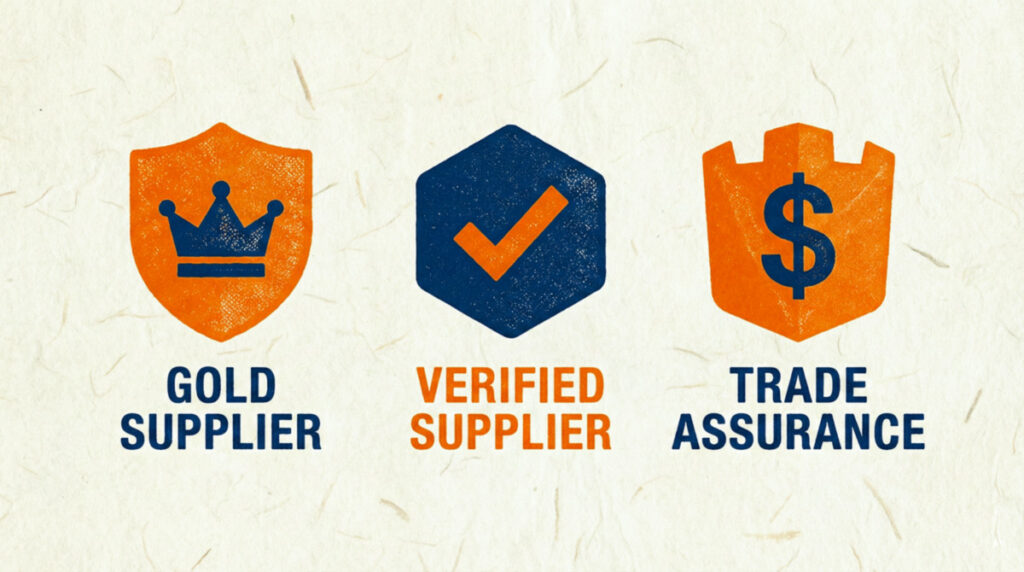
“Gold Supplier” means they paid for premium membership. “Verified Supplier” means Alibaba checked business registration. “Trade Assurance” provides payment protection.
These reduce risk but don’t eliminate it. Scammers can fake credentials or pay for badges while running fraudulent operations.
Common Alibaba scams and how they work
The deposit disappear act
Supplier quotes competitive prices, negotiates terms, requests 30% deposit via wire transfer to “start production.” Once you send money, communication stops. They vanish.
The company might be real but using Alibaba to find one-time victims, not repeat customers.
Bait and switch on quality
Samples are perfect. Bulk order arrives with inferior materials, wrong specifications, or defective products. Supplier blames “miscommunication” and refuses refunds.
You’re stuck with unsellable inventory and no recourse.
Fake factory fronts
Trading companies claim to be manufacturers. They show stolen factory photos, fake certifications, and impressive product ranges.
They’re middlemen adding markup or outright scammers with no production capability.
The clone website scam
Scammers create fake Alibaba-looking websites or copy legitimate supplier profiles. They redirect you to fake payment portals stealing your wire transfer information.
Always verify you’re on the actual Alibaba.com domain.
Intellectual property traps
Supplier produces your custom design, then sells it to competitors or directly to your market. You funded their product development and created your own competition.
How to verify suppliers before sending money
Check business registration and physical address
Request business license, tax registration, and company verification documents. Verify the company exists in Chinese business registries.
Google the address. Check if it’s a real factory location or a residential building. Scammers use fake addresses.
Verify factory capabilities through video calls
Request live video tours of production facilities. Ask to see specific equipment relevant to your product. Watch for evasive responses or refusal to show facilities.
Trading companies can’t show factories they don’t own.
Search for negative reviews and scam reports
Google the company name plus “scam” or “fraud.” Check Reddit, Alibaba forums, and industry groups for complaints.
Absence of negative reviews doesn’t prove legitimacy, but presence of scam reports is a red flag.
Request references from previous customers
Ask for contact information of buyers who’ve ordered similar products. Speak with them directly about their experience.
Legitimate suppliers have satisfied customers willing to vouch for them. Scammers can’t provide real references.
Verify certifications and quality standards
Request copies of ISO certifications, product testing reports, or industry compliance documents. Verify these with issuing organizations.
Fake certificates are common. Real ones are traceable.
Use reverse image search on product photos
Upload supplier’s product photos to Google reverse image search. If photos appear on multiple suppliers’ pages or stock photo sites, they’re stolen.
Real factories use their own photos of actual production.
Payment protection strategies that minimize risk
Always use Trade Assurance for first orders
Trade Assurance is Alibaba’s escrow system protecting payments up to coverage amount. Suppliers don’t receive funds until you confirm satisfactory delivery.
It’s not perfect but provides recourse if suppliers don’t deliver as promised.
Never wire money to personal accounts
Legitimate businesses have company bank accounts. If supplier requests wire transfer to personal account or provides inconsistent banking details, it’s a scam.
Start with small test orders
Don’t commit $10,000 on first order. Test with $500-$1,000 to verify supplier delivers quality products as promised.
Scale only after successful test orders.
Negotiate payment terms that protect you
Offer 30% deposit, 70% on delivery or after inspection. Avoid 100% prepayment. Legitimate suppliers understand buyer caution.
If supplier demands full payment upfront, they’re either scammers or financially unstable.
Use inspection services before final payment
Hire third-party inspection companies to check products before shipping. Release final payment only after passing inspection.
This prevents receiving defective bulk orders with no recourse.
Red flags that indicate potential scams
Prices dramatically below market rates
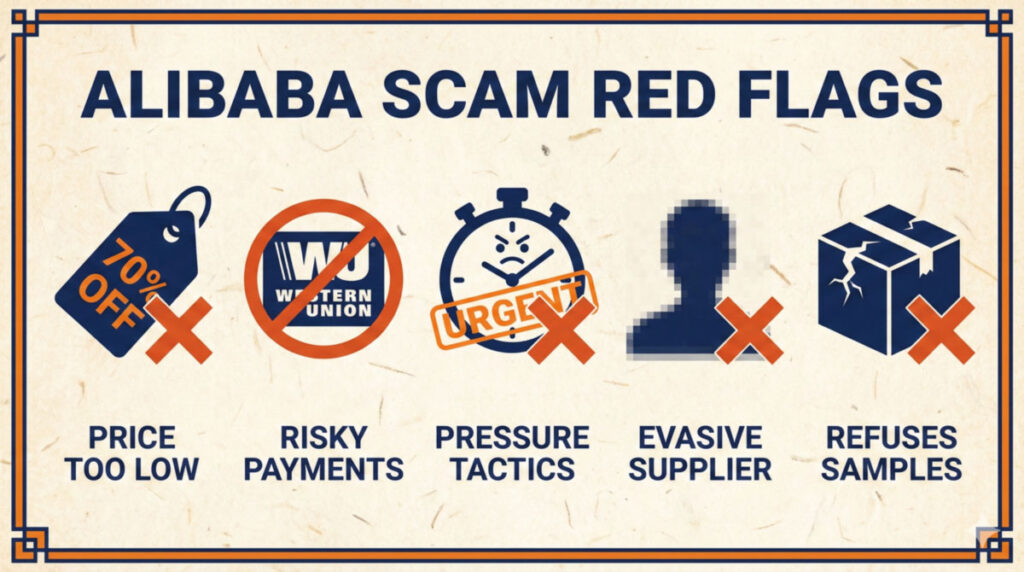
If pricing is 40-50% below competitors for identical products, it’s either fake pricing to lure you in or they’re producing with substandard materials.
Dramatically low quotes often signal quality compromises or fraudulent intent. Legitimate factory pricing varies widely by product category.
Pressure tactics and urgency
“Special price expires tomorrow.” “Other buyers waiting for your decision.” “Must pay deposit today to secure materials.”
Legitimate suppliers don’t pressure buyers. Scammers create urgency to prevent due diligence.
Poor communication and evasiveness
Vague answers to specific questions. Refusal to video call. Inconsistent information across messages. These indicate either incompetence or deception.
Professional suppliers communicate clearly and transparently.
Unwillingness to provide samples
Real factories are confident in their products and happy to provide samples. Scammers avoid samples because they can’t deliver quality.
If supplier makes excuses about samples, walk away.
Payment only via Western Union or cryptocurrency
No legitimate business requires untraceable payment methods. These are designed for one-way transfers with zero recourse.
What to do if you’ve been scammed
File dispute through Alibaba Trade Assurance immediately
If you used Trade Assurance, file claims within specified timeframe with evidence of non-delivery or quality issues.
Report to Alibaba platform
Submit formal complaints with documentation. Alibaba investigates and may penalize or remove fraudulent suppliers.
Contact your bank about wire transfer fraud
Report fraudulent wire transfers immediately. Recovery is unlikely. Contact your bank as soon as possible after discovering fraud.
Report to relevant authorities
File police reports and contact international trade fraud agencies. Create paper trail even if recovery is unlikely.
Note: The following steps are general suggestions only and do not constitute legal advice. Consult a legal professional for guidance specific to your situation.Leave public reviews warning other buyers
Post detailed accounts on Reddit, Alibaba forums, and industry groups. Prevent others from falling for same scam.
Why professional sourcing agents eliminate most risk
They’ve already vetted factory networks
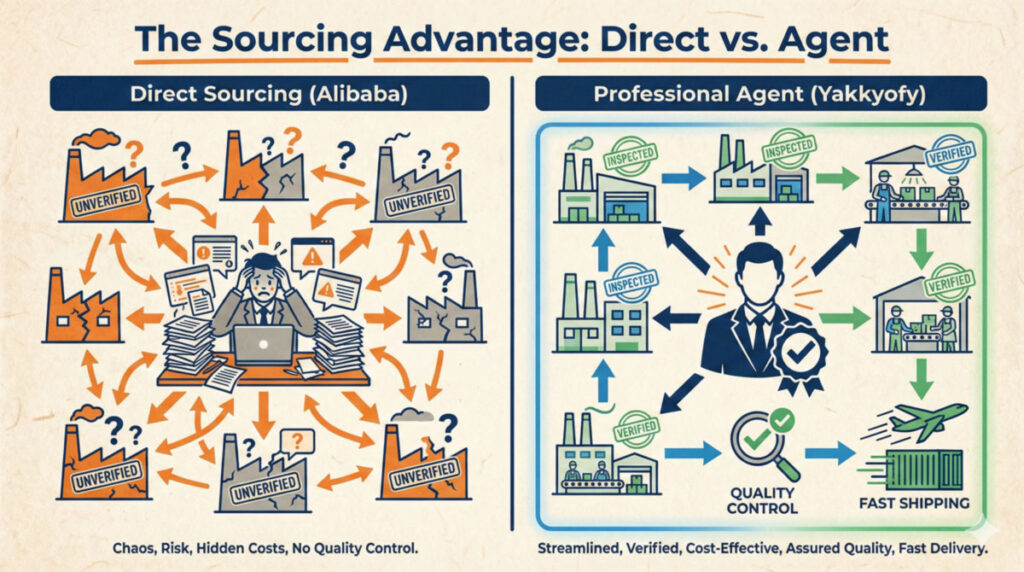
Sourcing agents like Yakkyofy maintain relationships with verified manufacturers they’ve worked with on hundreds of orders. You benefit from their due diligence.
They visit factories and verify capabilities
Agents physically inspect production facilities, verify equipment, check certifications, and establish direct relationships.
You don’t need to fly to China or conduct video calls with strangers.
They handle payments and provide accountability
Payments go through established business channels with greater accountability than direct wire transfers to unknown suppliers.
They conduct quality inspections before shipment
Products get inspected before leaving China. Defects caught before importing unsellable inventory.
They eliminate language and cultural barriers
Misunderstandings and communication breakdowns disappear when professionals handle negotiations and technical specifications.
The bottom line on Alibaba legitimacy
Alibaba is a legitimate platform. But legitimacy of the platform doesn’t guarantee legitimacy of individual suppliers.
Scams are real, common, and sophisticated. Protecting yourself requires verification, payment protection, and risk management.
For most sellers, directly using Alibaba without expertise is high-risk. Test orders work for product validation, but scaling requires professional infrastructure.
Sourcing agents provide factory access without the scam risk, verification complexity, or communication barriers. You get wholesale pricing with professional oversight.
Don’t gamble with wire transfers to unverified suppliers. Use infrastructure designed to protect you.
Start Your dropshipping business
FAQs
Is Alibaba safe to buy from?
The platform is legitimate but requires verifying individual suppliers, using payment protection, and conducting due diligence.
How do I know if an Alibaba supplier is real?
Verify business registration, request video factory tours, check references, use reverse image search on photos, and start with small test orders.
What’s the safest payment method on Alibaba?
Trade Assurance provides escrow protection. Never wire money to personal accounts or use Western Union.
Can I get my money back if scammed on Alibaba?
If you used Trade Assurance and file disputes with evidence, possibly. Wire transfers to non-protected accounts are unrecoverable.
Should beginners use Alibaba directly?
Testing small orders through Trade Assurance works for validation. Scaling requires professional sourcing infrastructure.


